Acs Peptide Screening Labs Third-party Peptide Analysis
@lorenzodxut873
October 7, 2026 · 4 min read
Validated > 99% Lab-grade Peptides

The gold criterion for measuring peptide purity is high-performance liquid chromatography, universally abbreviated as HPLC. If you see a pureness percent on a peptide product, it probably came from an HPLC analysis. This issues due to the fact that peptides are developed one amino acid each time via solid-phase peptide synthesis (SPPS). At each step, there's a tiny possibility that something goes wrong-- an amino acid does not affix, the incorrect modification takes place, or a side reaction creates an unexpected by-product. Over a chain of 10, 20, or 40 amino acids, those small per-step error rates compound.
Mass Spectrometry (ms): Identification Confirmation
- We choose techniques according to peptide length, hydrophobicity, cost account, and alteration standing as opposed to compeling every sample right into one design template.
- FDA and the European EMA have established standards mandating comprehensive evaluation and quality control for peptide products to make certain safety and effectivenessr.
- If topping isn't flawlessly reliable, an uncoupled chain can continue to elongate in succeeding actions, producing a peptide that's just one residue short of the target.
- If the COA notes "overall impurities", that matches the pureness number (e.g., 98% pureness implies 2% overall contaminations).
Nonetheless, achieving ultra-high pureness (say 99%) can be technically tough and may not constantly be essential, as we'll review later on. The key is comprehending what level of purity suffices for your needs and just how pureness is established to begin with. For the majority of research purposes, high purity implies you can be confident that the huge bulk of the particles in your vial are the proper peptide, which helps make certain speculative uniformity and reproducibility. Our workflow is designed to move from example context review to interpretable peptide data with very little logical obscurity. Jobs can vary from one sample identity check to multi-lot comparability, recurring review, solubility evaluation, or stability-focused logical plans. Hydrophobic peptides, extremely fundamental series, modified constructs, and very closely relevant analogs can be examined Pharmaceutical Manufacturing with method changes matched to their logical threats.
Kinds Of Contaminations Hplc Identifies
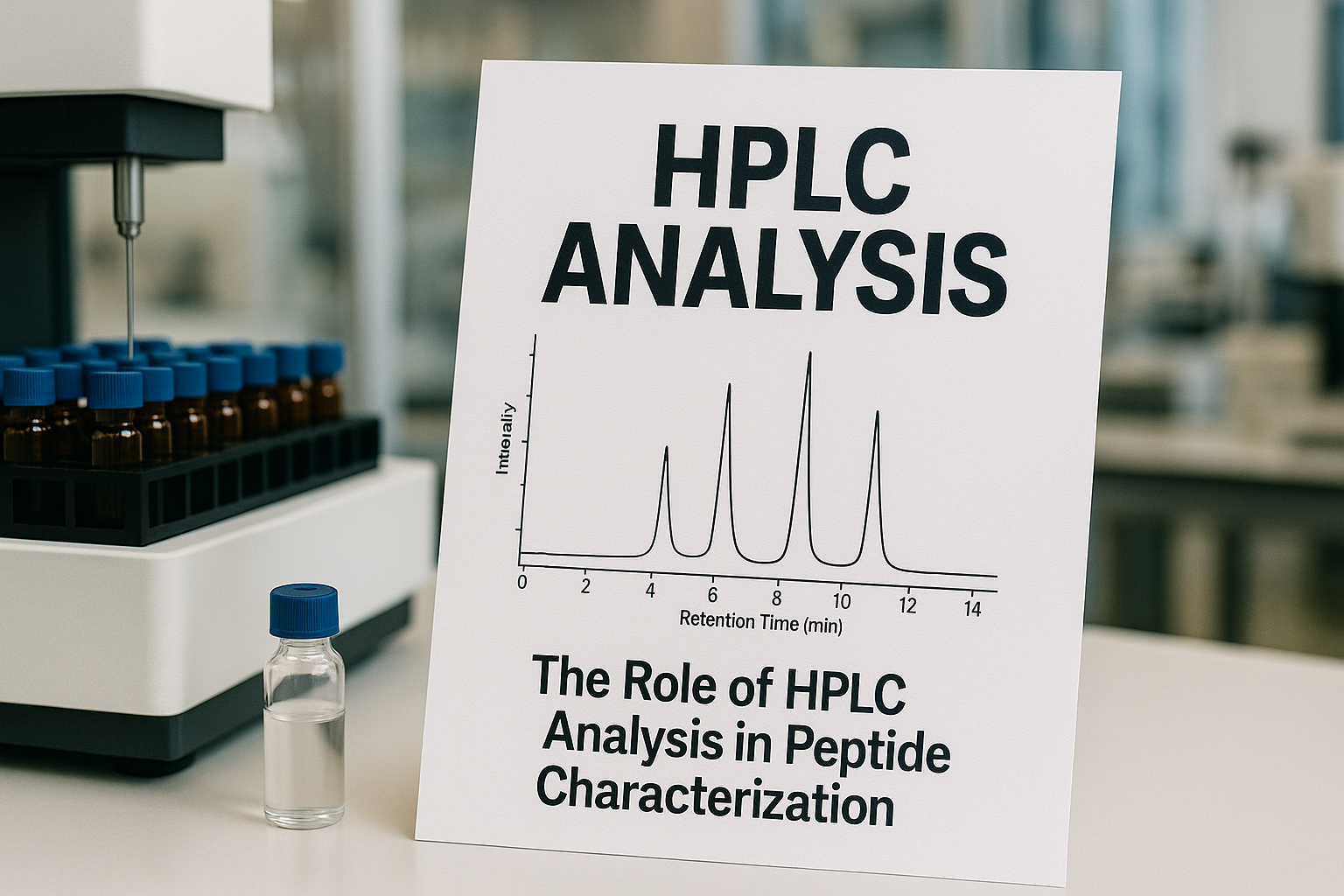
This front-end evaluation minimizes rework and improves the chance that the initial analytical pass will already be decision-useful. A modern-day HPLC system consists of a number of incorporated components, each offering a specific feature in the splitting up and detection process. Sign up with over 5,000 active participants and get updates on new arrivals and newest laboratory reports. In The KnowGet accessibility to our magazine, new arrivals, and most recent laboratory records.Tests can be carried out utilizing high-precision stablizing chambers, imitating various settings, and using worldwide requirements to study short-term and lasting security, important for regular peptide performance. Some peptides fall short not because the series is wrong, yet due to the fact that their physical actions in genuine solvents is badly understood. We supply physical home testing that aids teams work more effectively with challenging examples. Mass spectrometry confirms whether the determined mass matches the anticipated peptide mass. The chromatogram is one of the most crucial visual information aspect on an HPLC peptide test record. It is a chart with time on the straight axis and detector response, usually UV absorbance, on the vertical axis.
We can supply professional peptide purity decision services using logical reversed-phase HPLC combined with mass spectrometry. Each peptide is rigorously monitored during the analytical cycle according to strict analytical quality control and biosynthetic quality assurance requirements. HPLC is excellent at addressing the concern "exactly how pure is this example by chromatographic location percent? " It does not, by itself, confirm that the major height Quality Testing is the intended peptide.